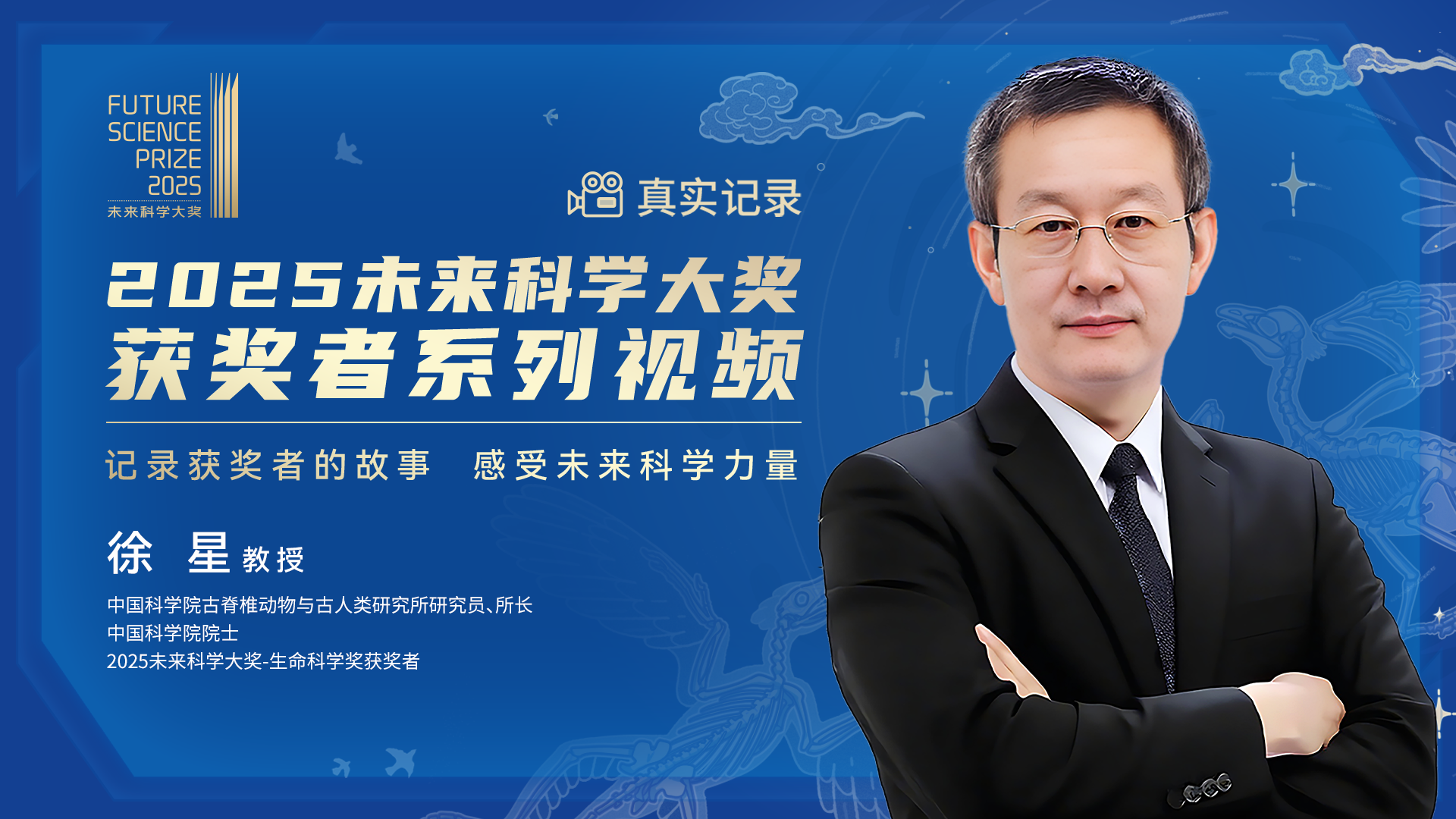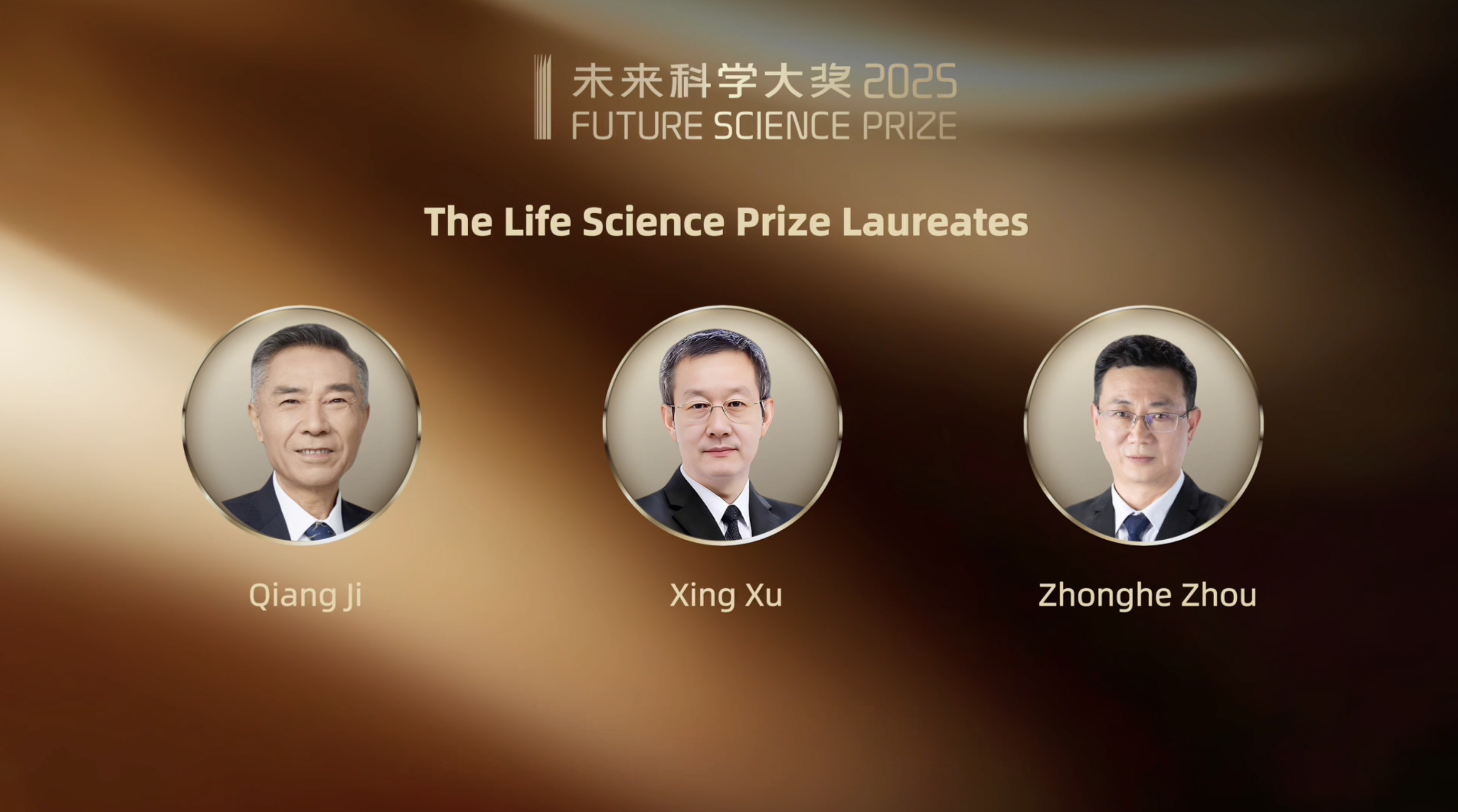

First and foremost, I would like to express my gratitude to the Future Science Prize Award Committee for bestowing this honor upon me. At the same time, I would also like to take this opportunity to thank my collaborators. Since the 1990s, I have had the pleasure of working with Professor Zhou Zhonghe and other colleagues on fieldwork, academic discussions, and manuscript writing. Together, we have spent many rewarding moments on this journey of exploring the origins of birds.
Furthermore, I would like to take this opportunity to say to my family and friends: thank you for your companionship and support, which have allowed me to live in a warm and happy environment. I must specifically mention that I have not spent much time with my family, and often, even when physically present, my mind was elsewhere—bringing work home. In these aspects, I need to improve, much like scientific research itself—a continuous journey of correcting mistakes and making progress.
To be honest, winning the award this year came as a surprise. When I received the call from Professor Rao Yi, I thought he was inviting me to give a lecture or teach a class at Peking University. I did not expect such a delightful surprise. Upon reflection, I believe there might be two reasons why the Future Science Prize in Life Sciences was awarded to the field of paleontology this year.
One reason is that although paleontology is a niche discipline, it has a strong tradition in our country. The discovery of the Peking Man fossils in 1929 was hailed as the first gold medal in Chinese natural sciences. Eminent scholars of the previous generation, such as Academician Zhang Miman, have worked tirelessly to enhance the international influence of our field. Over the past three decades, a younger generation of paleontologists has also produced a series of world-class achievements. From this perspective, I am, in fact, accepting this award on behalf of the entire Chinese paleontology community. This recognition signifies broader acknowledgment of our discipline.
The other reason, I believe, is related to the positioning of the Future Science Prize. In several research areas, including the origin of birds, Chinese paleontology has already contributed to the global framework of natural sciences. We have not only advanced the resolution of specific scientific challenges but have also contributed to textbooks both domestically and internationally. As we all know, textbooks form the foundation of the natural sciences and serve as a benchmark for measuring the significance of basic research achievements. Measured by this standard, China's basic research still has a long way to go. I believe that by honoring paleontological research, the Future Science Prize has set a benchmark for basic research in China. If, fifty or a hundred years from now, China's contributions are significantly reflected in scientific textbooks worldwide, then the Future Science Prize will have truly fulfilled its mission.
Science is, in fact, fascinating; scientists are truly cool; and scientific research is immensely fulfilling. This is the perspective of a paleontologist. If our award can inspire more young people to choose a path in basic scientific research, that would be our greatest contribution and honor!
Thank you!